My Foreign Neighbors Gave Me This and Said “Enjoy Your Meal”—But It Wasn’t Food at All At first, I was genuinely scared. My neighbors are foreigners. We barely communicate—just polite nods in the elevator, occasional smiles, nothing more. So when there was a knock on my door one evening, I wasn’t expecting much. They stood there smiling, holding out a small bag.
One of them said, in Russian, with a noticeable accent: — Enjoy your meal. I thanked them, confused but polite, and closed the door. Then I looked inside the bag.
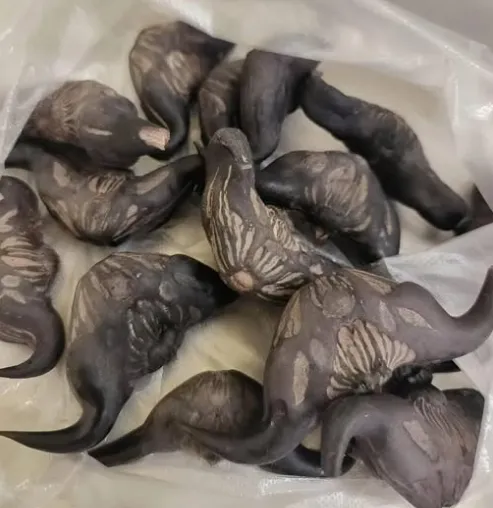
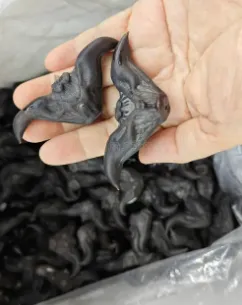
And froze. Inside were several dark, hard objects. Heavy. Cold. Completely unfamiliar. They didn’t look like food—more like something you’d see in a museum display… or a dinosaur movie.
In my hands, they felt almost like stones.
I smelled them—barely any scent at all. My stomach tightened. — Is this… food? I’d asked them cautiously at the door.
They’d nodded enthusiastically, smiling even wider, as if I should obviously know what it was. Now, standing alone in my kitchen, doubt started creeping in.
What if this wasn’t meant to be eaten? What if it was some kind of joke? What if I was missing something obvious—and embarrassing? Putting it in the fridge felt wrong.
Throwing it away felt even worse.
So I did what anyone would do. I went online. I searched by photo.
By shape. By texture. I tried every description I could think of. And when I finally found the answer…
It turned out to be Trapa bicornis Osbeck—more commonly known as water caltrop, water chestnut, or in some cultures, the bat nut or devil pod because of its strange, horned appearance.
And suddenly, everything made sense.
Those dark, rock-hard objects that felt like something from a fossil collection weren’t stones at all.
They were fruits—edible ones—wrapped in one of the most intimidating natural shells you’ll ever see.
What is Trapa bicornis Osbeck?
Trapa bicornis is an aquatic plant that grows in freshwater lakes, ponds, and slow-moving rivers, mainly in East Asia, Southeast Asia, Russia, and parts of India. The plant floats on the water’s surface, forming rosettes of green leaves, while its fruit develops underwater.
The fruit is what shocked me.
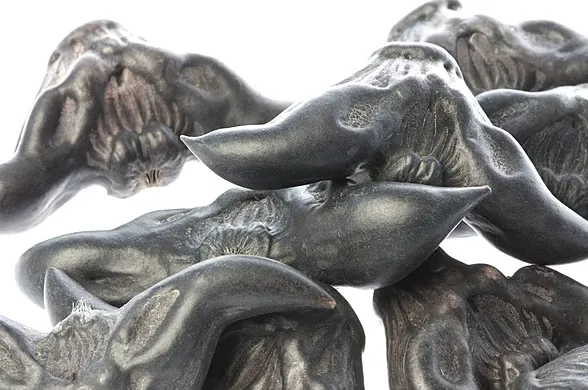
Encased in a thick, woody shell, the nut has two sharp, curved “horns,” which is why it looks nothing like conventional food.
Historically, this bizarre shape even led to legends that it was cursed or dangerous. In reality, the shell is simply nature’s way of protecting the soft, nutritious kernel inside.
Why would someone gift this as food?
In many cultures, Trapa bicornis is considered a seasonal delicacy and even a symbol of good health and longevity.
In China and parts of Russia, it’s often shared with neighbors or given as a thoughtful gesture—especially during harvest seasons or festivals.
To them, saying “Enjoy your meal” wasn’t strange at all. It was hospitality.
To me, it looked like something unearthed by archaeologists.
 Is it actually edible?
Yes—but not raw and not with the shell on.
The shell is extremely hard and not meant to be eaten.
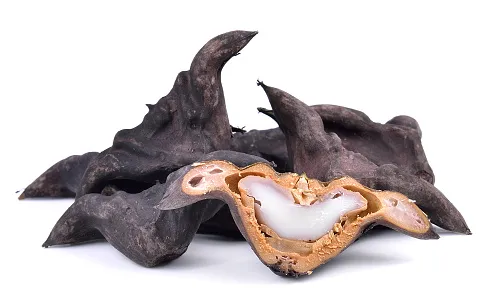
Inside is a white, starchy kernel that tastes mildly sweet and nutty, often compared to chestnuts or boiled potatoes.
How do you eat it?
The most common and safest way is:
Boil the whole fruit
Trapa bicornis is typically boiled in salted water for 30–40 minutes. This softens the inner nut and makes it easier to extract.
Crack the shell carefully
Once cooled slightly, the shell is cracked open using a knife, nutcracker, or even gentle pressure. Be careful—the horns are sharp.
Eat the kernel inside
The edible part is the smooth, white flesh. It can be eaten plain, dipped in salt, or added to dishes.
In some cuisines, the nut is also:
Roasted
Added to soups
Mashed into porridge
Used in traditional medicine recipes
What are its benefits?
Trapa bicornis isn’t just food—it’s nutrient-dense.
It contains:
Complex carbohydrates (good energy source)
Dietary fiber
Minerals like potassium and magnesium
Antioxidant compounds
In traditional medicine systems, it’s believed to:
Support digestion
Strengthen the kidneys
Improve stamina
Help regulate body heat
While modern science is still studying many of these claims, it has long been valued as a functional food, not just a snack.
Can it be grown?
Yes—but with important limitations.
Trapa bicornis can only be grown in freshwater environments. It requires:
A pond, lake, or large water container
Warm temperatures
Still or slow-moving water
Muddy substrate at the bottom
It’s not suitable for home gardens unless you have a controlled aquatic setup.
In fact, in some countries, certain Trapa species are regulated or even restricted because they can spread aggressively and affect local ecosystems.
So while it can be cultivated, it’s best left to regions where it’s traditionally grown and managed responsibly.
in nghiêng
Standing in my kitchen that night, fear slowly turned into fascination.
What I thought might be a prank—or worse—was actually a quiet act of kindness.
A neighbor sharing something from their culture, assuming I’d understand the unspoken context the way they would.
I cooked it the next day.
And when I finally cracked open that shell and tasted the nut inside, I laughed at myself.
 Top Video Viral