My name is Emily, and if my left shoulder could talk, it would probably win an award for Drama Queen of the Century. It has spent years testing me, betraying me, surprising me, and most recently… revealing something I never thought possible. 💥
Six years ago, after so many dislocations I lost count, surgeons tightened the capsule around the joint and anchored it down. They saved me from living like a puppet whose strings kept snapping. Recovery was hard, but I was determined. Eventually, I was back to school, back to singing, and back to life. For a while, my shoulder behaved like a loyal friend.
Then, without warning, it changed its mind.
It began with a strange sensation every time I lifted my arm. My scapula didn’t glide the way it should. It jerked, rotated, and sometimes just froze. Doctors called it scapular dyskinesia. I called it a revolt. My shoulder refused to listen to my brain, like it had grown a rebellious personality. I ignored it at first… but it didn’t ignore me.

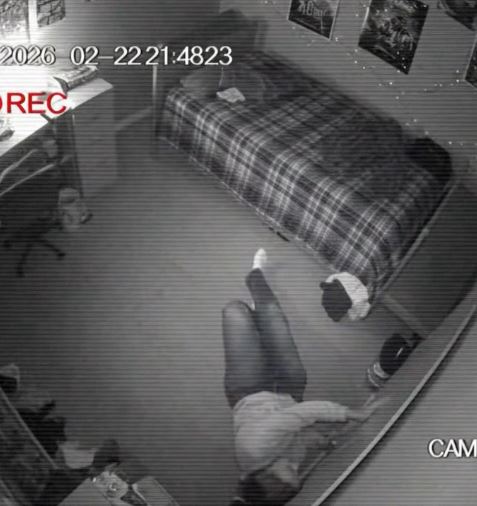
Last October, my shoulder decided it was done cooperating. I stretched in the morning, and suddenly — pop. That sickening slide out of place that made the world tilt sideways. My roommate, terrified but determined, helped me get it back. That became our new routine. Ice packs in the freezer, pain meds on standby, late-night emergency rotations. My parents joined in on weekends. We joked about earning honorary medical degrees, but inside, I was scared.
And then my scapula got jealous of all the attention and started dislocating too. Double dislocations. Twice the pain. Twice the panic. Twice the hours of trying to breathe without screaming. I slept in a sling, only to wake up dislocated anyway.
When November came, I saw my orthopedic surgeon again. He ordered the arthrogram MRI — a procedure that should absolutely come with a free trophy for bravery. The results weren’t pleasant: damaged capsule, destroyed labrum, instability everywhere. “You’ll need surgery,” he said, “but right now… you’re too unstable.”
I hated that sentence more than the pain itself.

So then came new braces. First the Gunslinger Brace. Sounds badass, right? Wrong. It was clunky, uncomfortable, and actually made my shoulder pop out even easier. It broke after a day. My dad fixed it with duct tape. I cried from laughter and exhaustion at the same time. 😅
But nothing prepared me for what came next — the half-body Spica cast.
One morning in December, after a week full of dislocations and ER visits, they knocked me out, shoved my shoulder into place, and wrapped half my torso in fiberglass. The cast forced my arm outward in a position only a broken doll would envy. I looked ridiculous. I slept sitting up. My best friend took photos and tried to make me laugh, but inside, I felt like my life was shrinking. The only good moment was when a therapy dog crawled onto the bed beside me and made me forget everything for a few minutes. 🐶💛

After six weeks, the cast came off — and so did my strength. My arm was limp, confused, almost foreign. Worse, the immobilization had injured my ulnar nerve. Suddenly my hand burned and zapped with electricity every minute of the day. CRPS, they said. Complex Regional Pain Syndrome. The kind of pain that makes you question what you ever did to deserve this.
Yet the fight wasn’t over.
I left the cast and entered the airplane brace stage. It felt like wearing wings that constantly smacked into doorframes. I needed a cane just to keep balance. Every week, I visited the brace shop for adjustments. I waited for someone to say, “We can fix this now.” But instead, my surgeon said the one sentence I feared most:
“You are not a candidate for surgery anymore.”
I stared at him, feeling like the ground had been kicked out from under me.
Physical therapy. Occupational therapy. Biofeedback. More braces. More patience. More tears. My family reminded me how strong I was. My friends helped me laugh. But I felt like my dreams — especially singing — were fading away.
Then came the day that changed everything.

My acappella group invited me to record a song for our new album. I hadn’t sung in months. I felt like a broken instrument. But something inside me whispered, “Go.”
I stepped into the recording studio, nervous and shaking. They handed me the headphones. The music started — soft at first, then rising like a wave. I opened my mouth and sang. 🎤✨
And something impossible happened.
My shoulder shifted — not out, but in. A smooth glide into perfect alignment. The pain quieted. My scapula moved correctly for the first time in months. The fire in my hand dimmed. I finished the song trembling, not from pain but disbelief.
The sound engineer turned around slowly.
“Emily,” he said, “Do you… feel anything different?”
I nodded, speechless.

He pointed to the screen. Sensors they had placed for posture tracking showed something extraordinary — while singing, my brain activated stabilizing muscles that had been dormant for years. The frequency of the notes, the breath control, the micro-vibrations… they had reconnected the pathways in my shoulder.
My voice had become my therapy.
Doctors confirmed it. No surgery in the world could do what music had done. I needed to sing not despite my injuries, but because of them.
Now, every rehearsal is part of my treatment. Every performance brings strength. My shoulder still tries to misbehave sometimes, but when I sing? It listens. Music healed a communication line my body had forgotten.

And here’s the twist no one saw coming — including me.
Last month, during a check-up, my surgeon entered the room smiling for the first time in years.
“Emily,” he said, “I don’t know how to explain this… but if this continues, your shoulder may fully heal without surgery. You might become the first documented case of neuromuscular rehabilitation through singing.”

It turns out… my miracle wasn’t in the hospital.
It was in my voice all along. 😳🎶🔥
Pain tried to silence me.
But I sang louder.
And I’m not done yet.
 Top Video Viral